
Introduction: Why People Search “Flash USDT Generator Free”
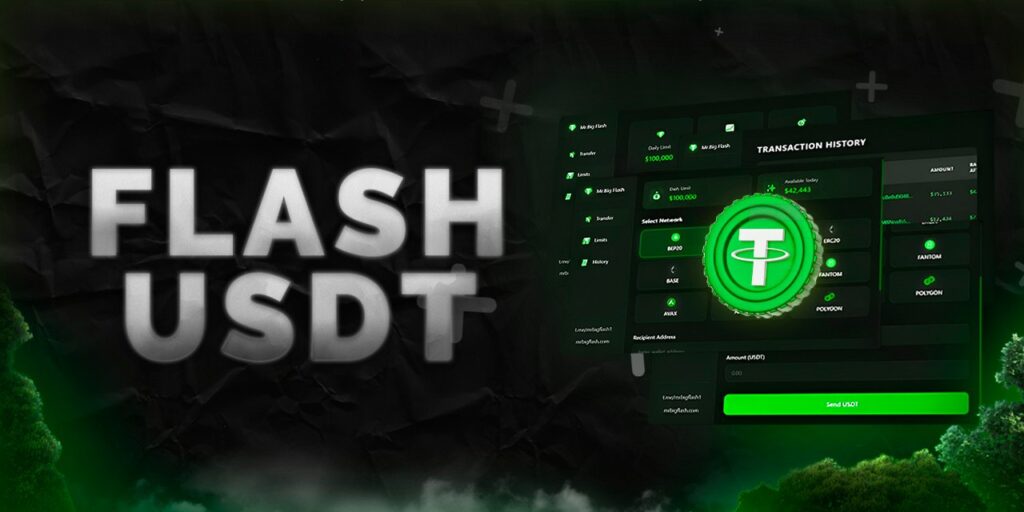
The phrase “flash usdt generator free” has become increasingly visible in online searches as more people explore blockchain tools, cryptocurrency concepts, and stablecoin-related technologies. At first glance, the keyword appears straightforward, but in reality, it reflects a wide range of motivations, assumptions, and misunderstandings about what Flash USDT generators actually are and what “free” means in this context.
For many users, the interest begins with curiosity. They may have encountered discussions, screenshots, or demonstrations mentioning Flash USDT and want to understand how it works without risking real funds. Others are learners, developers, or testers who are actively looking for a safe way to explore how USDT-related activity appears within applications, wallets, or interfaces. The word free often signals a desire to experiment or learn before committing to any paid software.
At the same time, the term is frequently misunderstood. Because it contains “USDT,” a well-known stablecoin associated with real monetary value, some users assume that a Flash USDT generator is a tool that creates or provides real USDT. This assumption is incorrect, but it is understandable given how loosely terminology is sometimes used online. Without clear explanations, it can be difficult to distinguish between simulation tools and real blockchain transactions.
Another reason people search for “flash usdt generator free” is the growing demand for risk-free learning environments in the blockchain space. Real cryptocurrency transactions are permanent and unforgiving. Sending funds to the wrong address, misunderstanding network fees, or misconfiguring a transaction can result in irreversible loss. As a result, many users prefer to learn how systems behave before interacting with real assets. Flash USDT generators are often mentioned in this learning context because they focus on behavior rather than value.
The popularity of this search term is also influenced by the increasing number of tools and platforms claiming to offer Flash USDT functionality. Some provide free demos or limited access, while others require payment for full features. Without clear guidance, users may struggle to understand what is legitimate, what is being offered, and what expectations are realistic—especially when the word free is involved.
This article exists to bring clarity before confusion. Rather than promoting unrealistic expectations, it explains exactly what a Flash USDT generator is, what the “free” aspect usually refers to, and how these tools are intended to be used responsibly. From the outset, it is important to be clear: a Flash USDT generator free does not provide real USDT, does not generate money, and does not replace real blockchain transactions.
Instead, Flash USDT generators are best understood as testing and educational tools. They are designed to help users observe how systems react to USDT-like activity, explore interfaces, and understand workflows in controlled environments where no real financial risk exists. Understanding this distinction is essential for making informed decisions and avoiding disappointment or misuse.
In the sections that follow, this article will break down what a Flash USDT generator actually is, explain what “free” really means, clarify how these tools work at a high level, and outline both their legitimate uses and their limitations. By the end, you will have a clear and accurate understanding of what to expect from a Flash USDT generator free—and what not to expect.
What Is a Flash USDT Generator?
To properly understand the phrase “flash usdt generator free,” it is essential to clearly define what a Flash USDT generator actually is. Despite the way the term may sound, a Flash USDT generator is not a tool that creates real USDT, nor does it generate cryptocurrency in the financial sense. Instead, it is commonly used to describe software-based testing or simulation tools designed to imitate certain visible aspects of USDT-related behavior for learning and demonstration purposes.
In legitimate contexts, a Flash USDT generator focuses on simulation rather than value. It allows users to observe how applications, wallets, or dashboards respond when USDT-like activity is present. This might include how balances appear on an interface, how transaction entries are displayed, or how system messages react to token-related signals. What is being demonstrated is system behavior, not the movement or creation of real digital assets.
A key point to understand is that Flash USDT generators do not operate on live blockchain networks. They do not interact with consensus mechanisms, do not perform real transaction settlement, and do not result in permanent records on a public ledger. Any activity shown within a Flash USDT generator is controlled entirely by software logic within a testing environment. This is what makes these tools safe for experimentation and learning, but also what separates them from real cryptocurrency systems.
The word generator in this context can be misleading. In blockchain terminology, generating or minting assets typically implies the creation of value-backed tokens governed by strict rules. A Flash USDT generator does not mint or create USDT. Instead, it generates simulated representations of USDT-like activity to help users understand how systems behave under certain conditions.
These tools are often used by learners who want to understand blockchain interfaces, by educators who want to demonstrate concepts visually, or by developers who need to test user experience and workflow logic before working with real assets. In all of these cases, the goal is preparation and understanding, not financial gain.
Understanding what a Flash USDT generator actually is helps eliminate many of the misconceptions associated with the keyword “flash usdt generator free.” It shifts expectations away from money and toward education, testing, and controlled experimentation. Once this distinction is clear, it becomes much easier to evaluate these tools responsibly.
What Does “Free” Mean in a Flash USDT Generator?
When users search for “flash usdt generator free,” the word free often carries strong expectations. In many areas of cryptocurrency, “free” is associated with giveaways, faucets, or promotional incentives. However, in the context of Flash USDT generators, the meaning of free is very different and must be understood carefully to avoid confusion.
In most legitimate cases, free refers to access, not value. A free Flash USDT generator typically means that users can explore certain features of a testing or simulation tool without making a payment. This may include demo access, limited-time use, or restricted functionality designed to help users understand how the tool works before deciding whether it meets their needs.
Free access does not mean free USDT. Flash USDT generators do not provide real funds, nor do they create digital assets with monetary value. The “free” aspect simply allows users to interact with a simulated environment where USDT-like behavior can be observed without financial commitment or risk.
Many Flash USDT generator platforms offer free versions to support learning and evaluation. For beginners, this makes it easier to explore blockchain-related concepts without feeling pressured to spend money. For developers or educators, free access allows them to test whether a tool is suitable for demonstrations or training sessions before investing in a full version.
It is also common for free versions to include limitations. These limitations exist to maintain clarity and prevent misuse. For example, free access may be time-restricted, feature-limited, or designed solely for demonstration purposes. These boundaries help reinforce that the tool is meant for testing and education, not for financial activity.
Misunderstanding the word free can lead to unrealistic expectations. Some users assume that a Flash USDT generator free version provides unlimited capabilities or real assets. In reality, the limitations are intentional and necessary. They protect both users and providers by ensuring the tool is used within its intended scope.
Understanding what “free” truly means helps users evaluate Flash USDT generators responsibly. It allows them to approach these tools with the right mindset—one focused on learning and experimentation rather than profit or value creation.
How a Flash USDT Generator Works (High-Level Explanation)
Understanding how a Flash USDT generator works does not require deep technical knowledge, but it does require a clear distinction between simulation and real blockchain activity. At a high level, a Flash USDT generator operates entirely within a controlled software environment, not on a live blockchain network where real USDT transactions occur.
Instead of interacting with blockchain consensus mechanisms, wallets, or public ledgers, a Flash USDT generator relies on application logic to simulate USDT-like behavior. This means the software is programmed to display how systems might respond when USDT-related activity is present. For example, it may show balance changes on a dashboard, generate transaction-like entries for demonstration, or trigger interface updates that help users understand workflow behavior.
What is important to understand is that these actions are visual and functional representations, not real transfers. No USDT is created, no funds are moved, and no ownership changes hands. The generator does not broadcast transactions to a blockchain, wait for confirmations, or record anything permanently on a public ledger. Everything happens within the boundaries of the software itself.
This approach allows Flash USDT generators to be used safely for learning and testing. Because the behavior is simulated, users can explore how applications respond without worrying about transaction fees, network congestion, or irreversible mistakes. The software can be reset, repeated, or adjusted without financial consequences, which is essential for education and experimentation.
Another key aspect of how these generators work is control. The environment is designed to behave in predictable ways. This ensures consistency during demonstrations and helps users focus on understanding system behavior rather than dealing with the unpredictability of live blockchain networks. This controlled design is intentional and reinforces that Flash USDT generators are not meant to replicate full blockchain functionality, but rather to illustrate specific concepts.
It is also worth noting that because Flash USDT generators operate outside of real blockchain systems, they cannot guarantee behavior identical to live networks. Real USDT transactions are influenced by network conditions, fees, and external factors that simulations cannot fully replicate. This is why Flash USDT generators are best used as preparatory tools, not substitutes for real-world testing.
Understanding how a Flash USDT generator works at this high level helps set realistic expectations. These tools are designed to teach, demonstrate, and prepare users—not to perform real financial operations.
Flash USDT Generator vs Real USDT Transactions
To fully understand the purpose of a Flash USDT generator, it is important to clearly distinguish it from real USDT transactions. Although the two may appear similar on the surface—especially when viewed through an interface—their function, impact, and meaning are fundamentally different.
Real USDT transactions involve the transfer of actual value on a live blockchain network. When real USDT is sent, ownership of funds changes, the transaction is validated by the network, and a permanent record is added to the blockchain. These transactions are irreversible once confirmed and can be verified publicly. Because real money is involved, real USDT transactions carry financial risk, responsibility, and consequences.
A Flash USDT generator does not operate in this way. It does not transfer value, does not change ownership, and does not interact with live blockchain networks. Instead, it simulates how systems might display or respond to USDT-like activity. Any balance shown, transaction entry displayed, or system response triggered by a Flash USDT generator exists only within the software environment itself.
Another major difference lies in permanence. Real USDT transactions are permanent and cannot be undone. Flash USDT generator activity is temporary by design. It can often be reset, repeated, or cleared entirely without any lasting impact. This temporary nature reinforces that Flash USDT generators are meant for testing and learning, not for storing or transferring assets.
Risk is also a defining distinction. Real USDT transactions expose users to the possibility of irreversible loss if mistakes are made. Flash USDT generators remove this risk completely, allowing users to experiment freely without financial consequences. This makes them especially useful for beginners, educators, and developers who are still learning how systems behave.
Finally, acceptability separates the two concepts. Real USDT is accepted across wallets, exchanges, and platforms worldwide. Flash USDT generator output has no acceptance outside the testing environment in which it is used. It cannot be used for payments, trading, or real-world transactions.
Understanding this difference helps users avoid unrealistic expectations. Flash USDT generators are educational tools, not financial instruments. Real USDT transactions are financial operations, not simulations. Each serves a different purpose, and confusing the two leads to misunderstanding.
Legitimate Uses of a Flash USDT Generator
A Flash USDT generator has value only when it is used for legitimate and clearly defined purposes. Understanding these uses helps place the tool in its proper context and prevents it from being misunderstood as something it is not. At its core, a Flash USDT generator is meant to support learning, testing, and demonstration, not financial activity.
One of the most common legitimate uses of a Flash USDT generator is education. Blockchain concepts can be difficult to grasp without seeing how systems behave in practice. Learners often want to understand how balances are displayed, how transaction histories appear, or how interfaces react to token-related events. A Flash USDT generator allows users to explore these behaviors in a safe environment, without risking real funds or dealing with irreversible mistakes.
Another important use is demonstration and training. Educators, trainers, and presenters often need to explain blockchain workflows to audiences who may not be technical. Using real USDT in these situations can be risky and distracting, especially if something goes wrong during a live demonstration. A Flash USDT generator makes it possible to show system behavior clearly and consistently, allowing the focus to remain on learning rather than execution.
Flash USDT generators are also useful for interface and user experience testing. Developers and designers may want to verify how an application displays balances, updates transaction lists, or responds to token-related triggers. By simulating USDT-like activity, they can identify design issues, improve clarity, and refine workflows before working with real assets. This approach reduces errors and improves the quality of applications that will later interact with live blockchain systems.
In some cases, Flash USDT generators are used for workflow validation. Applications that interact with tokens often include logic tied to transaction states, notifications, or status updates. Simulated activity allows teams to test these workflows repeatedly and safely, ensuring that the system behaves as expected under different scenarios.
Another legitimate use is confidence-building for beginners. Many people hesitate to explore blockchain systems because they fear making costly mistakes. A Flash USDT generator provides a low-pressure environment where users can experiment, learn, and build familiarity before moving on to real transactions. This confidence is essential for responsible participation in real blockchain environments.
All of these legitimate uses share a common theme: no real value is involved, and transparency is maintained. The tool is used to understand systems, not to gain financial advantage. When approached with this mindset, a Flash USDT generator can be a helpful educational resource.
What a Flash USDT Generator Free Version Can and Cannot Do
When users encounter a Flash USDT generator free, it is important to understand both its capabilities and its limitations. Free access is designed to introduce users to the tool’s functionality, not to provide unrestricted or financial features. Knowing what a free version can and cannot do helps prevent misunderstanding and ensures the tool is used appropriately.
A free Flash USDT generator typically allows users to explore basic simulation features. This may include viewing how USDT-like balances appear on an interface, observing how transaction entries are displayed, or interacting with limited testing scenarios. These features are intended to demonstrate how the system behaves and to give users a sense of how the software works in a controlled environment.
What a free version does well is education and evaluation. It allows beginners to learn without pressure and gives developers or educators the opportunity to assess whether the tool is suitable for their needs. Because no real value is involved, users can interact with the software safely and repeat actions without consequence.
However, a free Flash USDT generator also comes with clear limitations. These limitations are intentional and necessary. Free versions are often restricted in terms of duration, feature access, or usage scope. Some may limit how often simulations can be run, how long results remain visible, or which tools are available. These boundaries reinforce that the software is for testing and learning, not for financial use.
Importantly, a free Flash USDT generator cannot create real USDT, cannot transfer value, and cannot be used for payments or trading. Any balance or transaction-like behavior shown in a free version is simulated and exists only within the application. Users should never expect free access to result in ownership of digital assets or financial outcomes.
The presence of limitations also helps protect users from misuse. By restricting functionality, free versions discourage attempts to treat the tool as a financial instrument. This keeps expectations aligned with reality and supports ethical use.
Understanding these capabilities and limitations allows users to approach a Flash USDT generator free with the right mindset. It is a way to learn, explore, and evaluate—not a source of value or profit.
Risks and Misunderstandings Around “Flash USDT Generator Free”
The phrase “flash usdt generator free” carries a high risk of misunderstanding, largely because of how the words flash, USDT, and generator are commonly interpreted in the crypto space. Without clear explanations, users may form expectations that do not match reality, which can lead to confusion, disappointment, or inappropriate use.
One of the most common misunderstandings is believing that a Flash USDT generator creates or provides real USDT. This assumption often comes from familiarity with the USDT name and the idea of generators producing value. In reality, Flash USDT generators do not create money, do not mint tokens, and do not interact with live blockchain networks. Any appearance of value is simulated and exists only within the testing environment.
Another risk comes from misunderstanding the word free. Some users assume that “free” implies unlimited access or ongoing functionality without restrictions. In practice, free versions are intentionally limited and designed to demonstrate features rather than replace full tools or real blockchain activity. Expecting a free Flash USDT generator to function like a financial product sets users up for disappointment.
There is also a risk of misinterpretation by third parties. If Flash USDT simulations are presented without clear explanation, observers may mistakenly believe they represent real transactions. This is why transparency is essential. Flash USDT generators should always be used in contexts where it is clear that no real value is involved.
Ethical and legal considerations also matter. While Flash USDT generators themselves are testing tools, misrepresenting their output as real funds or using them to mislead others can create serious problems. Responsible use means understanding the tool’s purpose and ensuring that it is never presented as a substitute for real USDT or real payments.
Another misunderstanding is assuming that Flash USDT generators can bypass blockchain rules or fees. Because these tools operate outside live networks, they do not reflect the full complexity of real transactions. Relying on simulations alone without eventually learning how real systems work can lead to gaps in understanding.
Being aware of these risks helps users approach Flash USDT generators with realistic expectations. When used correctly—as educational and testing tools—they can be helpful. When misunderstood or misrepresented, they can cause confusion and harm trust.
Frequently Asked Questions (FAQ)
Many users searching for “flash usdt generator free” have similar questions, mostly because the term is often encountered without proper explanation. This section addresses the most common concerns to help readers leave with accurate expectations.
A common question is whether a Flash USDT generator provides real USDT. It does not. Flash USDT generators do not create, mint, or distribute real USDT. They do not interact with live blockchain networks and do not represent actual monetary value. Any balances or transactions displayed are simulated for testing or educational purposes only.
Another frequent question is whether a Flash USDT generator free version means free money. It does not. The word “free” refers only to access to limited software features or demo environments. It does not mean free cryptocurrency, rewards, or financial assets.
Some users ask if Flash USDT can be used for payments or transfers. It cannot. Flash USDT generator output is not accepted as payment and cannot be sent, received, or exchanged as real currency. It exists only within the boundaries of the software environment.
There is also confusion about permanence. Flash USDT generator activity is typically temporary and resettable. It does not create permanent records on a blockchain and should never be treated as proof of ownership or transaction history.
People also ask who Flash USDT generators are intended for. These tools are best suited for learners, educators, developers, and testers who want to understand how systems behave before interacting with real blockchain assets. They are not designed for financial use, trading, or investment.
Finally, users often wonder whether Flash USDT generators are legal. The tools themselves are not inherently illegal, but misuse or misrepresentation—such as presenting simulated output as real funds—can lead to ethical or legal issues depending on jurisdiction. Responsible and transparent use is essential.
Final Conclusion: Understanding Flash USDT Generator Free Before Using It
The growing interest in the phrase “flash usdt generator free” reflects a broader desire for safe, accessible ways to learn about blockchain systems without risking real money. While the terminology can be confusing, the underlying concept is much simpler when clearly explained.
A Flash USDT generator is not a source of real USDT, not a stablecoin, and not a financial tool. It does not generate value, transfer funds, or replace real blockchain transactions. Instead, it exists as a testing and educational tool, designed to help users observe how systems respond to USDT-like activity in controlled environments.
The “free” aspect of a Flash USDT generator refers to limited access or demo functionality. It allows users to explore features, learn how interfaces behave, and evaluate tools before committing to full versions. It does not imply free money, unlimited access, or financial outcomes.
Used responsibly, Flash USDT generators can play a legitimate role in blockchain education and development. They help beginners build confidence, support educators in demonstrations, and allow developers to test workflows without financial risk. Misunderstood or misrepresented, however, they can create unrealistic expectations and confusion.
The most important takeaway is simple: Flash USDT generators are about understanding systems, not creating or transferring value. Anyone approaching these tools should do so with clarity, transparency, and realistic expectations.